
Average Daily Attendance (ADA) funding drives your budget, and most schools aren’t capturing all of it. Not because they’re doing anything wrong, but because the strategies that maximize attendance-based revenue take good systems and knowledge of tools that don’t always get enough attention. This session is built around schools that got creative — legally — and what they learned.

Your LCAP is supposed to connect your goals for students to the resources you’re committing to reach them. In practice, those two halves of the document often tell completely different stories because the people who build the vision and the people who manage the budget rarely work closely enough together. That disconnect is the real reason most LCAPs fall short. This session is built around fixing that.
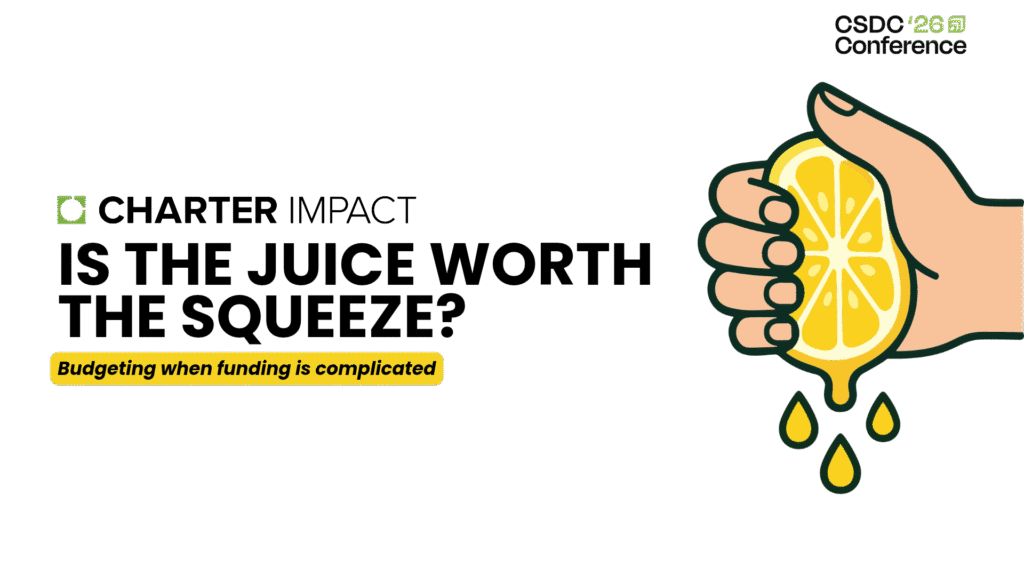
Funding cliffs aren’t over. The Student Support Block Grant just doubled. Despite some overall economic insanity, one-time funds keep magically landing in school budgets. The decisions we make about how to spend them, when to spend them, and whether to spend them at all are harder than they look. Gain a clearer strategy for timing your spend, protecting your core, and making sure the juice is actually worth the squeeze.
Engaged and informed charter school boards routinely ask the same high-stakes questions: What happens if enrollment drops another 5%? What’s our plan if state funding changes yet again? How long can we sustain this? The schools that answer those questions with confidence aren’t just reporting accurately, they’re leading strategically. This session is designed for school leaders and board members who want to get ahead of the conversation rather than scrambling to catch up with it.
Most charter school boards don’t see financial trouble coming until it’s already a problem. It’s not because they aren’t paying attention; it’s because they’re not sure which numbers matter or what to do when something looks off. This session builds a simple cheat sheet of financial indicators every board member should know, what healthy looks like, and how to spot warning signs.