 Listen
January is more than a calendar reset. It is a moment of truth for school finances.
By this point in the year, enrollment has stabilized, staffing decisions are largely set, and revenue assumptions are either holding or quietly drifting out of alignment. A mid-year financial reset helps school leaders assess whether their budget still reflects reality and where small adjustments now can prevent larger disruptions later.
At Charter Impact, we support schools through routine KPI review, rolling forecasts, and regular financial updates presented to leadership teams and boards. Not every school has access to that level of ongoing financial partnership, which makes dedicated moments of review especially valuable. The goal is the same in every case: clarity about where things stand and enough lead time to make thoughtful, informed decisions.
Rather than a full reforecast, many schools benefit from a KPI health check, a focused review of the indicators that most reliably signal financial health.
The Core KPIs to Review Mid-Year
While every organization is different, most charter schools should revisit these fundamentals at the start of the calendar year.
1. Enrollment vs. Budget Assumptions
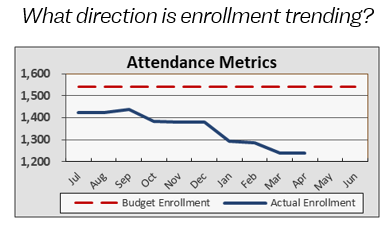
Are current enrollment and attendance tracking to the levels used in your adopted budget?
Even modest gaps can compound over time, particularly in states where funding is highly attendance-sensitive. Ongoing reporting continues to highlight enrollment volatility as a defining financial challenge for public schools.
Metric to monitor: Budgeted enrollment vs. year-to-date actual enrollment (percent variance)
2. Cash on Hand
Cash flow, not just year-end surplus, determines how much flexibility a school truly has.
If cash balances are declining faster than expected, it may indicate timing mismatches, underestimated expenses, or overly optimistic revenue assumptions. Strong cash forecasting practices help surface these issues early.
Metric to monitor: Days cash on hand (current vs. target)

3. Staffing Costs as a Percentage of Revenue
Personnel remains the largest expense category for most schools. Rising benefit costs and mid-year staffing changes can quietly shift this ratio.
State charter associations consistently recommend monitoring staffing ratios throughout the year, not just at budget adoption, recognizing that staffing is a dynamic variable requiring ongoing oversight.
Metric to monitor:
- Total compensation divided by total revenue
4. Budget vs. Actual Variance Trends
One-time variances happen. Patterns are more telling.
Repeated unfavorable variances often signal assumptions that no longer hold. Clear, consistent reporting paired with transparency helps leadership teams focus on correction rather than explanation.
For a deeper dive: https://www.charterimpact.com/blogs/charter-school-expenditure-reporting-where-transparency-meets-education-impact/
Metric to monitor:
- Top recurring unfavorable variances year to date
Why This Reset Matters
Most financial challenges do not begin with a crisis. They begin with small gaps left unaddressed.
A January KPI check gives leadership teams the clarity to:
- Adjust spending before cuts become urgent
- Revisit assumptions ahead of spring planning
- Communicate confidently with boards
Organizations like the National Alliance for Public Charter Schools consistently emphasize that strong financial governance is rooted in regular review, not reactive decision-making.
A reset does not mean something is wrong. It means you are paying attention.
How Often Should Schools Review Financial KPIs?
At a minimum, schools should formally review core financial KPIs quarterly. Many schools benefit from monthly review, particularly during periods of enrollment change, staffing growth, or funding uncertainty. The goal is not perfection, but early visibility and time to respond.